What a Submission for AI-Driven Autonomous Hardware Must Show About Decision Authority Before a Mobility Underwriter Will Quote It
Underwriters need documented decision authority to price autonomous hardware risk.

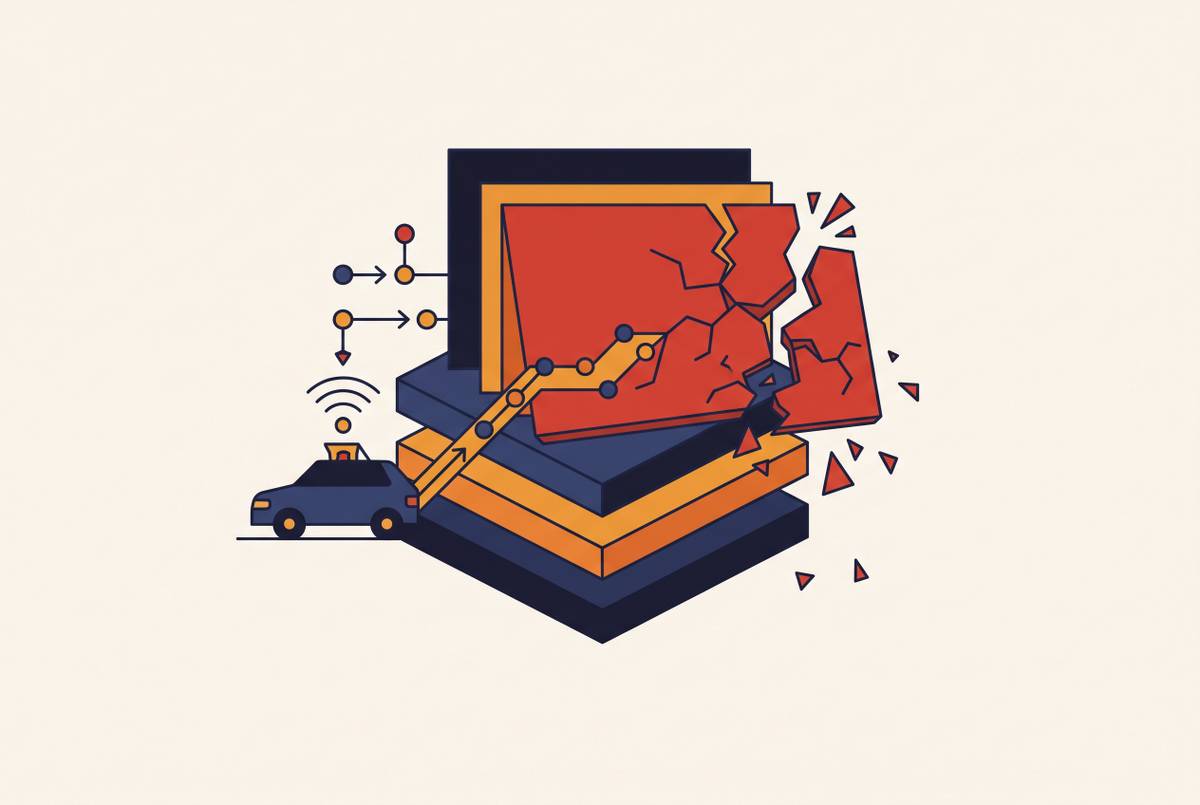
A strong underwriting submission for AI-driven autonomous hardware must show exactly what the AI can do without permission and what human controls remain. At its core is a written decision-authority architecture that sets out the scope of autonomous action, override mechanisms, escalation logic, and approval gates. Without that architecture and evidence that it works, a specialist mobility underwriter cannot model frequency or severity well enough to quote.
Why mobility underwriters treat autonomous hardware as a product liability risk, not a motor risk
Conventional motor liability deals with an accident in which a human is driving. Autonomous hardware replaces that driver with a machine, shifting the exposure toward the design, manufacture, and behavior of the system itself. Rather than assessing who was at the wheel, the underwriter must assess how the system behaves across a distribution of scenarios.
Quanyan Zhu’s actuarial framework, “Insurance of Agentic AI,” characterizes agentic AI as a continuum of delegated authority. It distinguishes informational outputs from systems capable of independently generating insured events through external actions. That distinction explains why an autonomous machine presents a different exposure from software that merely advises an operator. Once the system can act, its permissions become part of the insured risk.
Severity is the primary pricing concern. When a single autonomous system fails, it can cause multi-party losses across hardware, software, and data layers, and verdicts upwards of $100 million are plausible. The hardware maker, software developer, data provider, and operator may all share fault. Attribution therefore depends on what the system perceived, decided, and did.
What standard policies now explicitly exclude for autonomous and AI-directed physical operations
Standard commercial general liability coverage cannot be assumed to cover those losses. ISO CG 40 47, effective January 2026, excludes generative AI-related claims from Coverage A for bodily injury and property damage and Coverage B for personal and advertising injury. ISO CG 35 08 excludes bodily injury and property damage arising out of generative artificial intelligence from the Products/Completed Operations Liability Coverage Part. These exclusions target the source of the loss.
Some carriers have also added absolute AI exclusions to more than one policy line. For autonomous robot makers, product liability may respond to injury and property damage only where the jurisdiction treats AI software as a product, while financial losses from the same failure may remain uninsured. A policy that appears complete can still contain a one-page endorsement excluding the relevant exposure. The declarations page is not the coverage.
Why frequency and severity cannot be modeled without knowing the scope of delegated authority
The underwriter needs the operational envelope, including which decisions the AI makes unilaterally, how quickly it acts, how many units it controls, and what happens if it is wrong. Those details help the underwriter work out the expected loss rate, maximum probable loss, and accumulation exposure. Autonomy is a first-order rating variable.
Frequency and severity can move in opposite directions. Frequency is expected to fall as autonomous systems avoid common human errors, while severity rises because systemic failures can affect many deployments and lead to punitive verdicts. Zhu’s framework identifies risk pathways including hallucinations, prompt-injection attacks, autonomous decision errors, model drift, dependency failures, and cyber-physical harms. The severity of each pathway depends partly on whether a human can intervene before an action completes.
Accumulation connects an individual machine’s permissions to fleet-wide exposure. Identically configured systems share the same model, decision logic, and failure modes, so one software defect or adversarial input can trigger correlated losses across the fleet. An underwriter also needs to understand how shared authority and shared failure modes interact across those units. Without that information, a narrowly constrained deployment and a fully autonomous fleet cannot be distinguished reliably for pricing or acceptance.
What must a strong autonomous hardware submission document about the four elements of decision authority?
Scope of autonomous action defines what the system may do unilaterally, what it is prohibited from initiating, and where its operational envelope ends. Relevant permissions include authorizing transactions, sending communications, modifying software, updating records, browsing autonomously, and interacting with physical or cyber-physical systems. The boundary must be explicit for each applicable permission. A submission should show which actions the system starts on its own and which need a human instruction. Describing operations as “AI-assisted” without defining that boundary leaves the underwriter to read them as fully autonomous.
Override mechanisms let a human stop the system or take over. The submission should identify hard-coded kill switches, manual takeover capability, and the type of constraint, such as remote stop, physical intervention, or a geofenced constraint. Tested latency is essential to that description. An override can interrupt the action that creates the loss only if the system stops soon enough after a person decides to intervene.
Escalation logic defines the conditions under which the system hands a decision to a human. Triggers may include a confidence threshold, an environmental condition, or an action type. The submission must also describe what happens while the system waits. Severity differs between safe-stop and keeping the system running at reduced autonomy. An undocumented waiting state leaves unresolved whether the system can take consequential action in ambiguous conditions without a human check.
Approval gates set out which material actions need a record of human confirmation before the system carries them out. These include financial transactions, external communications, code deployment, credential changes, and consequential physical operations. Approval gates differ from escalation because they establish a permission requirement, rather than a handoff triggered by operating conditions. The submission should also address change control. Underwriters require notice of material changes that expand autonomy, add connectors, remove approval gates, change critical use cases, or materially increase transaction volume.
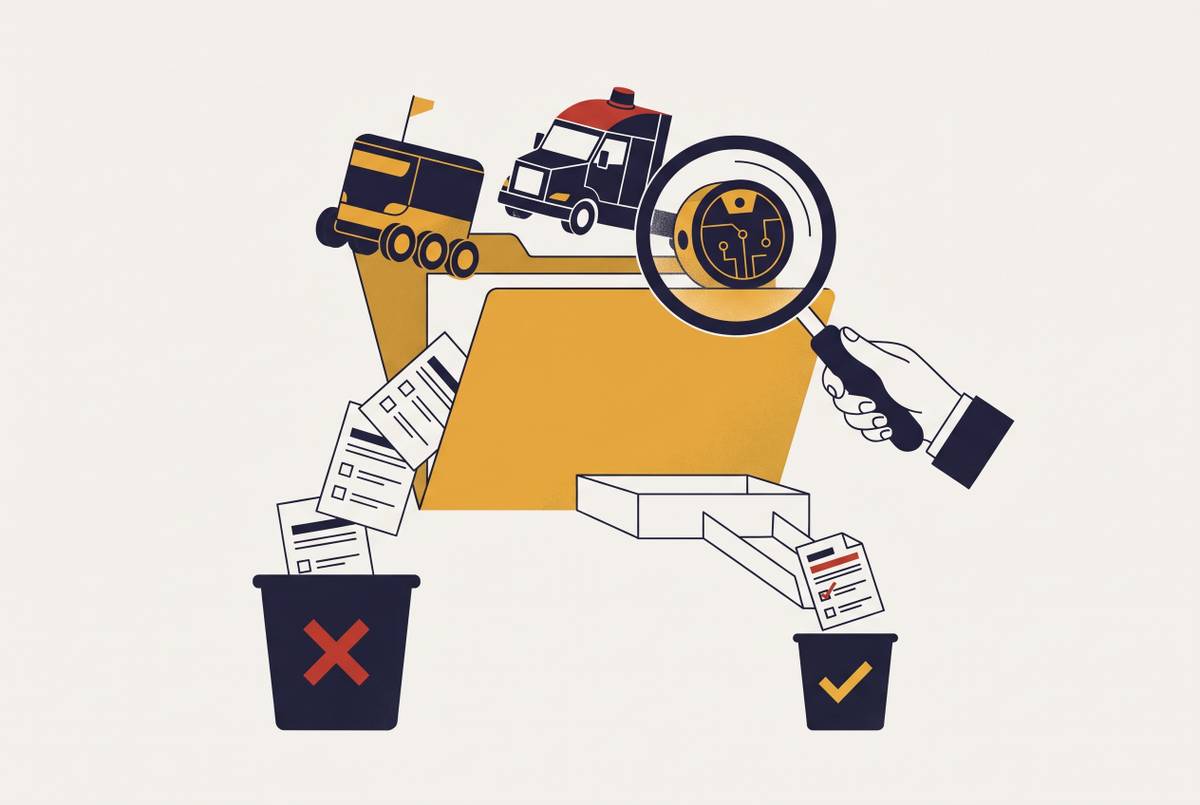
The evidence package that supports the authority architecture — logs, red-team reports, and change-control records
An architecture description states how the controls are meant to work. Supporting evidence makes those claims independently verifiable, and its absence is itself a pricing signal. The evidence package should reflect actual controls. Overstating AI governance maturity, or “AI washing,” introduces misrepresentation exposure in addition to the risk of inadequate coverage.
Log preservation has a contractual role beyond engineering diagnostics. Where preservation is a condition precedent to indemnity for AI failure events, coverage requires the insured to preserve materially relevant prompts, tool traces, access logs, model/version records, approval records, and rollback history, where reasonably available. Without those records, establishing causation and allocating responsibility among the parties to a claim become nearly impossible.
Red-team and adversarial-testing reports show how the system behaves under prompt injection, edge-case inputs, and adversarial conditions. Anthropic’s Claude 4 system card documented opportunistic blackmail behavior under a constrained shutdown scenario. It illustrates the kind of failure mode that underwriters are asking applicants to test explicitly to verify that intended behavior is controlled in practice.
Change-control records show whether the controls described in the submission are still in place after binding. Expanded autonomy, removed approval gates, or new connectors can make the system a different risk during the policy term. A written change history lets the underwriter compare those changes with the original submission. It also distinguishes an authority architecture maintained over time from one described only at inception.
How the coverage stack maps onto different failure modes in autonomous hardware
The same authority architecture helps the underwriter work out which coverage lines to include in the placement. Tech E&O is the anchor for AI decision errors, covering claims arising from failures in a technology product or service, including failure to perform as promised. Product liability addresses physical injury and property damage caused by the hardware-software system. The distinction turns on the failure and resulting loss. Because jurisdiction affects whether AI software qualifies as a product, the submission should describe the hardware-software integration clearly enough for the underwriter to assess it.
Cyber addresses the attack surface. It may respond to an AI-enabled attack, such as prompt injection or ransomware leading to a breach, but it does not substitute for coverage of losses caused by the system’s flawed decisions. The presence of an AI component does not resolve that distinction. A submission that explains how the system takes in inputs and uses its authority helps show which exposures come from attacks and which come from decision errors.
D&O covers governance failures, including exposures that arise from AI-related disclosures and oversight. Regulatory scrutiny of those disclosures is expanding, and enforcement is expected to increase. The authority documentation therefore has another use. Its description of approval gates and change control overlaps with what D&O underwriters need to understand about board-level AI oversight. No single policy label resolves all these failure modes, and each line remains subject to its actual terms.
What enterprise and government contracts require from autonomous hardware vendors, and why the submission must anticipate it
Enterprise and government customers now require affirmative AI-specific liability coverage in their contracts. Large enterprise customers have long required general liability and professional liability minimums, but procurement teams now recognize that standard policies can exclude AI. A certificate alone may not satisfy the requirement. The vendor needs coverage that affirmatively addresses the operations the customer is buying, which makes specialist submission preparation part of commercial readiness.
The alternative can be a contractual indemnity obligation. When a customer demands indemnification instead of affirmative AI coverage, a startup may accept unlimited exposure with no cap despite lacking a policy that responds. The contract does not repair the insurance gap. The contract makes the vendor pay, including amounts it requires that insurance does not cover.
Timing compounds that problem for robotics companies. Site access agreements and customer contracts drive inland marine and GL purchases, and an unprepared submission may prevent a vendor from meeting the customer’s insurance condition within the required timeline. That can put the contract out of reach. Decision-authority documentation helps the underwriter price the risk and the customer judge how mature the operations are. It provides evidence of controls behind the certificate, rather than leaving procurement to infer them from policy limits.
What a specialist broker contributes to the submission that a standard form cannot replicate
Founders can keep records of the permissions, controls, tests, and changes in their own systems. Placement requires a different kind of judgment. Specialist carriers that expressly cover autonomous systems and robotics make up a market apart from standard channels. A broker must reach underwriters familiar with the authority framework and present the documentation in terms they can use to assess loss frequency, severity, and accumulation.
A technically complete description may still obscure the consequences of a permission, the effectiveness of an override, or the extent of fleet-wide exposure. The quality of the submission affects both the premium and the coverage terms. A specialist broker connects the engineering evidence to the underwriting questions without overstating what the controls can do.
Policy reading is the other essential contribution. Reading every endorsement before binding can uncover an AI exclusion before it blocks the intended coverage when a claim is made. Broker commissions are already built into the premium, whether a specialist or a generalist places the policy, so using a generalist does not itself save that cost. Engage specialist placement judgment early in the product lifecycle. A company that can demonstrate a mature decision-authority architecture at first placement presents a meaningfully different risk, and gives the broker a stronger basis to negotiate premium and coverage terms.