Which Broker Disciplines Actually Route Autonomous Hardware Submissions to Mobility Underwriters Instead of General Liability Desks
Matching autonomous hardware to the right desks keeps losses from falling between policies.
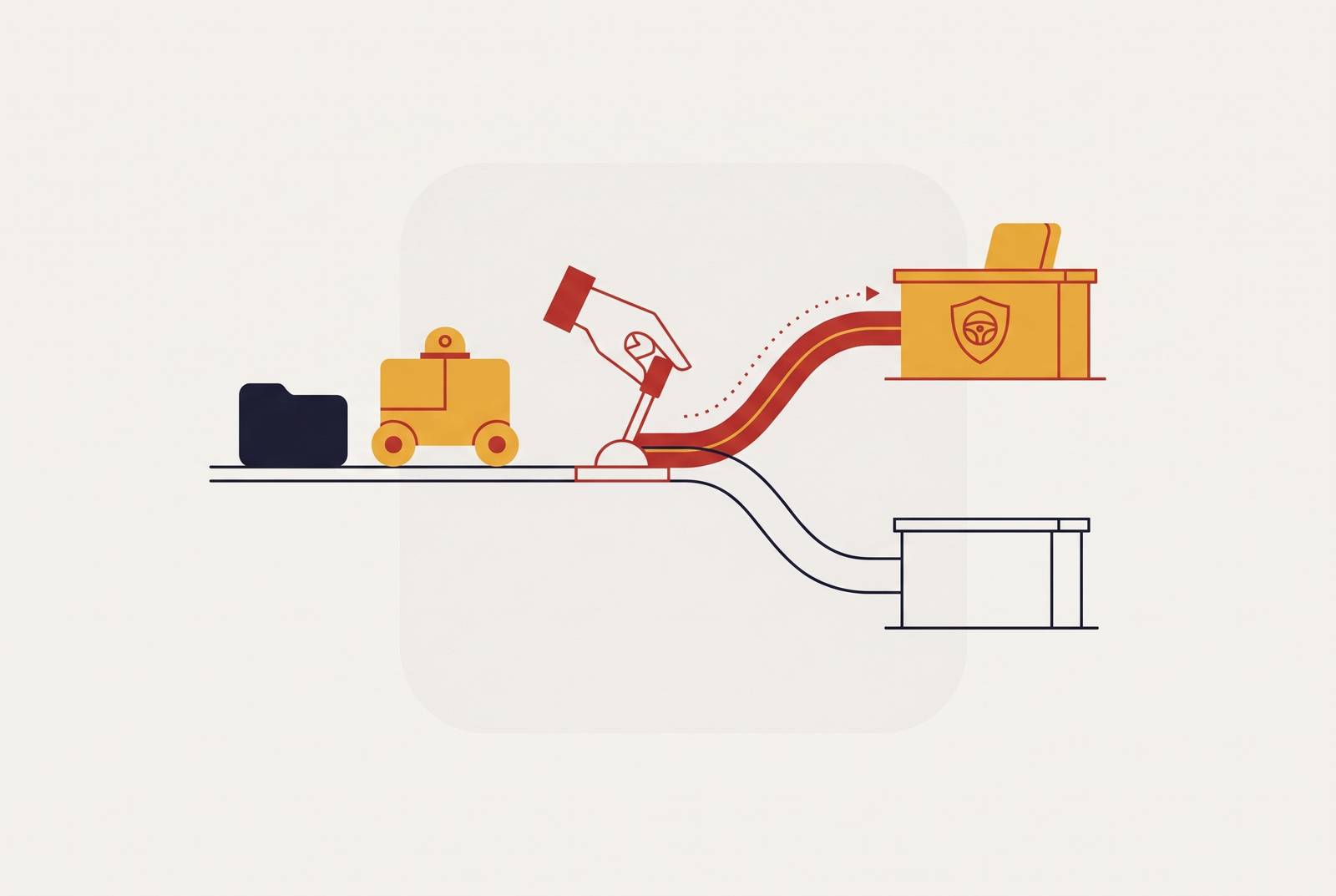
A good underwriting submission for autonomous hardware matches the technical evidence to the desks that have authority to cover autonomous failures. The right broker discipline provides both the relationships and the submission architecture to reach mobility underwriters. A strong placement then coordinates physical, software, and cyber coverage so that a loss does not fall between policies.
Why an autonomous hardware submission almost always lands on the wrong underwriter's desk
A standard ACORD commercial package application can make an autonomous hardware company read as a manufacturing risk. Brokers submit applications through emails, PDFs, and spreadsheets with varying formats and completeness, but a generalist carrier’s intake process routes that manufacturing description to a general liability desk. The routing follows the application. Information about autonomy level, sensor architecture, and over-the-air updates may never reach a mobility or technology underwriter.
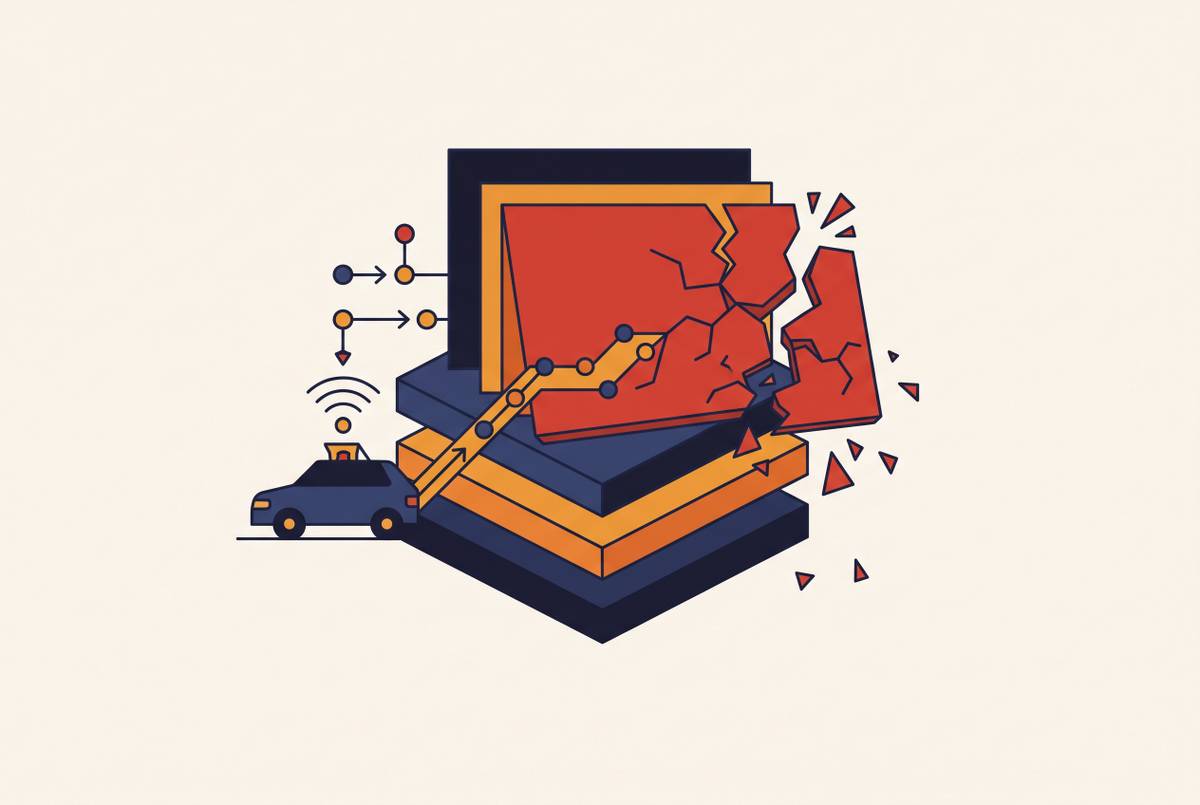
That initial classification shapes the policy that follows. A general liability underwriter pricing manufacturing exposures does not have the framework needed to evaluate AI decision-making failures, sensor degradation, or fleet-wide software faults. The resulting wording can therefore miss the losses the company’s systems actually produce. Misrouting is a structural placement failure, with consequences that may remain hidden until a claim tests the coverage.
Why autonomous hardware risk breaks every category boundary legacy underwriting was built on
WTW’s August 2026 analysis illustrates the problem through a humanoid robot dropping a heavy box on a contractor. A design flaw can implicate the manufacturer, an algorithm error the software developer, inadequate safety procedures the operator, and sensor failure the maintenance provider. One incident crosses several lines of liability. Product, general, professional liability, and cyber exposures can overlap because software failure now produces physical consequences rather than only incorrect recommendations or lost data.
The boundary is also unclear during work on the machine itself. OSHA guidance identifies programming, testing, and maintenance as frequent settings for accidents involving unexpected activation from control or state-management errors. Such a failure can sit between product defect and professional error. Andrew Hill of WTW’s FINEX division raises the corresponding coverage question for a cyber attack causing property damage. A property policy may exclude the cyber cause while a cyber policy excludes the physical damage.
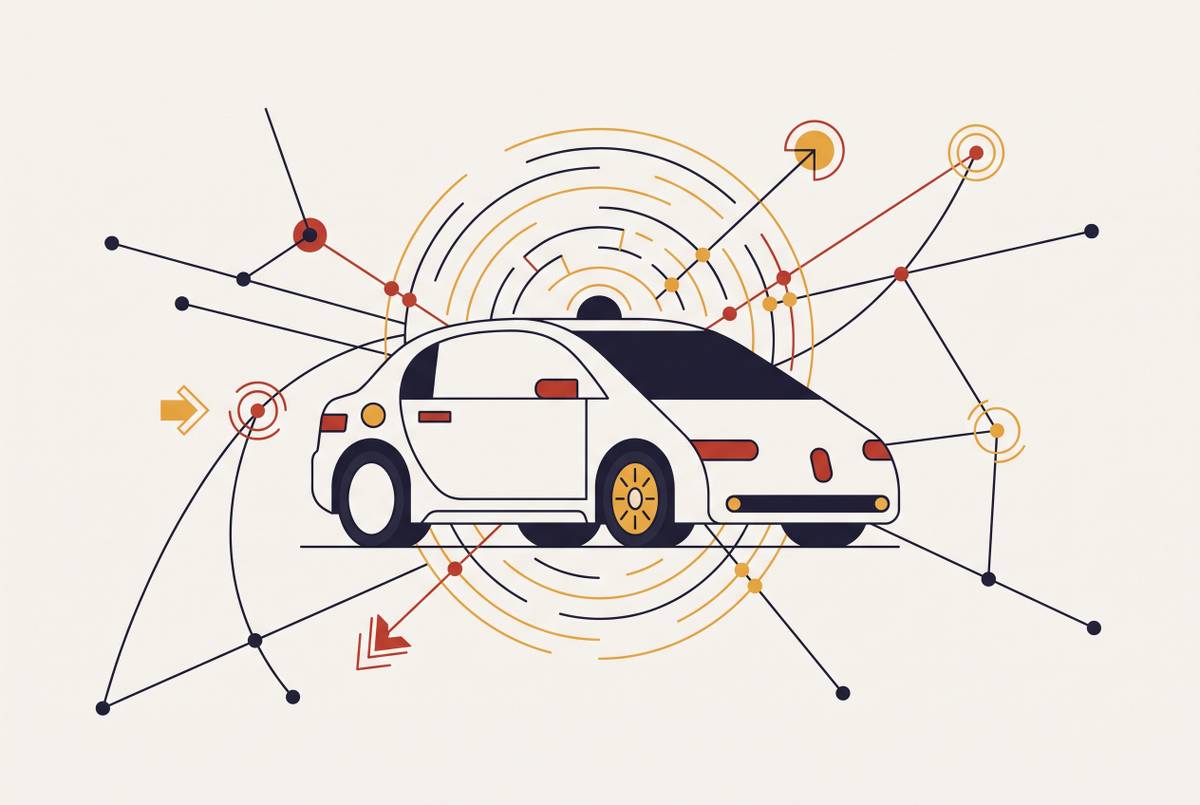
Accumulation makes that boundary problem harder to price. A software update, cloud outage, or navigation error can affect many devices simultaneously, while separate organisations may share operating systems, AI models, or software suppliers. Legacy actuarial models built for industrial controllers, relays, and hydraulic systems lack a framework for neural network misclassification, adversarial inputs, and emergent fleet behaviours. Routing each exposure into an isolated line leaves the connections between causes, consequences, and exclusions unexamined.
What broker disciplines exist and how each one relates to the underwriting desks that actually handle autonomy
Generalist commercial brokers primarily work through standard admitted carriers and commercial package applications. The desks they know tend to handle general liability, property, and commercial auto. Those connections work for conventional commercial risks, but on their own they do not open the specialty autonomy markets that need technical submissions. Technology E&O specialists have access to a different underwriting unit. Those desks understand software professional liability, but do not have the authority to cover the bodily injury and property damage exposures of physical deployment.
Cyber specialists have access to underwriting units that are taking more interest in connected systems. Their access addresses another part of the risk, because most cyber wordings require a cyber-attack predicate. An autonomous robot can make a damaging decision without intrusion. That no-breach AI error falls outside most cyber triggers, even when a cyber specialist has placed the policy.
Robotics and advanced technology specialists maintain relationships with underwriters focused on robotics, AI, and emerging technology risk. These are the relationships that can reach affirmative autonomy coverage. Program and MGA specialists offer another way in through programs built for robotics and physical AI that link retail brokers to specialty reinsurance capacity. Auxilium Specialty positions itself as an AI-native managing general agent for emerging and novel risks, including robot makers, distributed through brokers. A retail broker without access to such a program cannot reach its capacity through submission quality alone.
What makes a strong insurance submission for autonomous hardware with AI-driven decision making
A strong submission first explains what the system is permitted to do and how people can intervene. Autonomy level, human override protocols, and operational domain constraints define the deployed exposure. Sensor redundancy architecture then gives the underwriter evidence about the system’s safeguards. Software version control and OTA update governance explain how changes are managed. Historical incidents and near misses add operating evidence that a standard commercial application does not request.
The governance file must support that technical account. Specialty underwriters require audit evidence, training data provenance, model performance reports, incident-response protocols, and conformity assessment records before binding coverage. Without that evidence, the underwriter cannot price the risk. The consequence can be an elevated premium or a decline, rather than a finding that autonomous hardware is inherently uninsurable. Access to the right desk cannot compensate for a submission that leaves its central questions unanswered.
Documentation also affects the breadth of available terms. Firms that put structured risk management in place early can get broader cover and keep access to excess layers, while weak governance can lead to higher retentions, narrower wording, or being shut out of specialty markets. Insurers are adding AI usage and control questions much as cyber applications developed detailed security questionnaires. Koop’s In Bots We Trust 2026 report identifies six documents that pre-empt nine in ten underwriting conditions. Submission preparation is a defined practice.
How coverage lines must be stacked for autonomous hardware, and which desks hold each piece
The technical submission must support a coordinated coverage tower across several desks. General liability remains relevant to bodily injury and property damage, but WTW notes that standard forms predate widespread autonomy and that new 2026 ISO exclusions may remove many AI-related claims. Hill also identifies wording that assumes human involvement, although many policies are agnostic about whether a person or autonomous system caused the loss. When AI controls physical systems, product liability needs a close look. Calling a policy general liability does not by itself show that it provides that protection.
Technology E&O and standalone AI liability cover the professional layer through links with technology and specialist AI underwriters. Hallucination, bias, and model drift remain ambiguous unless the wording responds affirmatively. Cyber desks hold the connected-systems layer, including extensions for cyber-attack-related bodily injury, property damage, business interruption, and product liability. Those extensions still need a cyber-attack predicate. The policies must work together to cover both the gaps left by exclusions and autonomous errors that happen without an attack.
Inland marine is the natural home for high-value hardware in transit or temporarily deployed, but software-initiated loss and AI navigation failures require specialist endorsements. Auxilium’s robot-maker coverage combines products liability, recall and field fix, performance E&O, and general liability, with autonomy covered. D&O becomes part of the programme later, when investors and board members need personal liability protection. The broker must be able to make these placements work together as well as get separate quotes from unrelated desks.
How enterprise and government contract requirements force the routing question into the open
Technology E&O and cyber insurance are non-negotiable in most enterprise AI contracts, while product liability is specifically required when AI controls physical systems. Contracts commonly also require 30-day notice endorsements, additional insured status for general liability, and waiver of subrogation. Minimum E&O and cyber limits scale with contract size. A placement can name the right coverage line yet fail the contract because its form or endorsements do not meet the specification.
Government obligations expose a similar mismatch between assumed duties and purchased coverage. Incident response costs and liability for subcontractor AI failures do not fit the triggers of standard general liability policies. Routing the company as a conventional manufacturer leaves those duties unaddressed. The policy therefore needs to respond to the liability accepted in the agreement.
Hill notes that the EU AI Act is in force and has extraterritorial reach, potentially bringing organisations developing, supplying, or using AI systems in the EU within scope even when headquartered elsewhere. That creates investigation and defence cost exposures that standard policies do not address. The programme must account for the company’s deployment and contractual footprint as well as the hardware it sells.
Why the deployment-insurance gap means the routing problem will get worse before it gets better
Specialty capacity is opening before the market has deep actuarial evidence. China Pacific launched a dedicated humanoid robot policy in September 2025, followed within weeks by Ping An and PICC. Zurich and YAS added embedded robotics cover in Hong Kong in June 2026. These entrants are writing ahead of the data. They lack decades of claims history, published failure-rate baselines, and standardised diagnostic-coverage reporting against which to price the new risks.
Meanwhile, most available commercial cover remains an endorsement on machinery insurance that does not address the new failure categories. Specialty carriers are making capacity available for autonomy while mainstream carriers are filing exclusions for AI-related general liability. More products do not automatically mean easier placement. Access remains dependent on reaching the underwriters whose remit includes the failure modes being presented.
With so little loss data, much depends on the submission. Underwriters rely disproportionately on its quality as a proxy for risk quality, so a technically structured presentation can unlock capacity without any change to the underlying machine. The same report from Koop identifies terms, rather than price, as the primary friction in robot insurance. Without responsive wording at reasonable premiums, operators retain unquantified liability that constrains commercial deployment. Specialist routing is most useful at this early stage, when the evidence a broker can gather does much to give underwriters confidence.
What selecting the right broker discipline actually requires in practice
For founders and operators, the selection test begins with specific underwriting access. Which specialty units will receive the submission, and what format do those units require? A broker with genuine mobility relationships can explain both. A reference to “technology markets” without the criteria of a specific autonomy desk indicates general technology access.
The next questions concern technical fluency and the work product. Can the broker explain autonomy level, sensor redundancy, OTA governance, and operational domain constraints without prompting? Axis Insurance frames the diagnostic around understanding how autonomy stacks are designed, deployed, and governed, including how failures propagate across systems. That understanding must translate into a submission built from the company’s technical documentation and public information. The company should be able to obtain a coordinated programme without having to learn underwriting application formats.
Cost is not the reason to default to generalist placement. Broker commissions are built into the premium regardless of which broker places the policy, so specialist placement does not itself add a separate cost relative to generalist placement. The remaining test is how the broker evaluates coverage before binding. Which deployment loss scenarios have been tested against the entire programme, and where has insurer intent been clarified? Hill recommends working through those scenarios with the client and clearing up uncertain wording with insurers before a loss happens.
A licensed broker must read every policy before it binds. That is the non-negotiable safeguard for finding and closing gaps between desks before they become denied claims.