Building an Autonomous Hardware Submission Around the Mobility Underwriting Form Not the Default Robotics Application
Mobility forms capture the operating evidence that underwriters need to price autonomous risk.
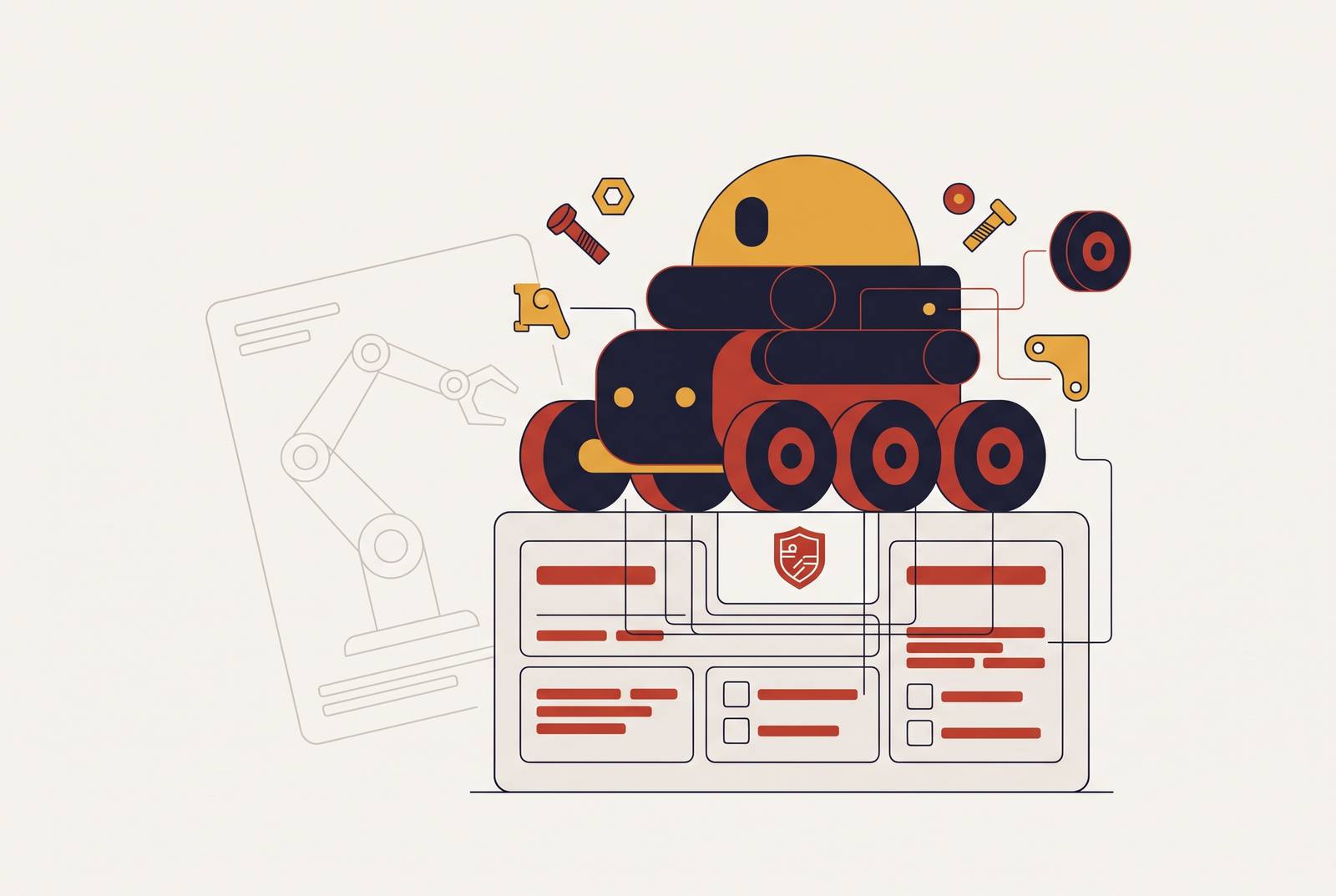
A good underwriting submission for autonomous hardware describes how the system moves, makes decisions, and stays within its operating limits. A submission built around the mobility underwriting form, rather than the default robotics application, gives insurers the operational evidence needed to price that exposure. It supports a more defensible premium and coverage that addresses autonomous operations rather than treating them as generic general liability risk.
Why moving autonomous hardware through the world is a categorically different insurance problem than operating a fixed robot
A robot arm bolted to a factory floor operates within a controlled, fenced environment, with largely deterministic failure modes and a short liability chain. A mobile autonomous system moves among pedestrians and other vehicles, over mixed-use surfaces, and through infrastructure that changes. Its surroundings become part of the exposure. Sensor degradation in variable lighting or weather can affect navigation, while an unexpected human-robot interaction in a public corridor introduces conditions that a stationary deployment does not face.
WTW’s August 2026 analysis describes physical AI as adding physical consequences to software risks. Those consequences include collisions, fires, and operational disruptions that can injure people or destroy property. A software error that might corrupt a record in one setting can cause a collision at speed in a mobile system. Responsibility may then extend across the hardware maker, software developer, and operator. Underwriters therefore must assess both the system’s technical reliability and the changing physical conditions in which that reliability must hold.
What the standard robotics application was designed to do — and where its frame breaks down for mobile systems
The standard robotics application asks reasonable questions for deployments where people supervise machines that largely stay in one place. It collects robot type, payload, operator count, work environment, prior loss history, and general liability limits. These describe a machine working within a fixed setting. They are less useful for distinguishing autonomous systems whose exposure changes with their route, software, or degree of human intervention. The limitation is the application’s frame.
For mobile systems, the missing information includes the Operational Design Domain, or ODD, software version and update cadence, autonomous mode engagement rates, and disengagement frequency. The form also leaves out sensor performance thresholds and map currency. Without ODD documentation, an underwriter cannot tell enough about how a closed private campus differs from public roads with mixed traffic. Without software records, the carrier cannot assess whether an update during the policy period could materially change the behavior originally underwritten. An application that looks complete can thus leave the insurer setting a price based on assumptions, often through a premium buffer, exclusions, or sublimits.
What underwriters actually need to price autonomous mobility risk — and why the mobility form exists to collect it
Mobility underwriting starts with evidence of the deployed operation. Carriers require complete ACORD applications for each line that applies, three years of valued loss runs that describe the incidents, and an operational narrative that covers the autonomous vehicle stack. They also call for ODD testing documentation and a vehicle schedule identifying VIN, radius, weight, and use. Software reliability records must describe the version of the automated driving system, or ADS, that is in use. The version is part of the risk.
That evidence extends to operating performance and regulatory history. Mobility carriers increasingly require telematics inputs including miles in autonomous mode, disengagement frequency, sensor performance logs, map currency, and third-party safety validation scores. NHTSA-mandated crash reporting history adds information that a standard robotics application does not solicit. For startups, the business strategy and how much funding they have help explain the business behind the technology.
AIFT’s June 2026 insurability research places autonomous system liability in its own area of affirmative AI insurance, separate from the risks of model performance, hallucination, or tech E&O. That distinction explains the need for a separate underwriting frame. The mobility form structures the collection of operational signals so carriers can compare submissions without trying to infer autonomous exposure from a generic equipment description.
How the coverage stack for a mobile autonomous system differs from a standard robotics program — and what the right form enables
Commercial auto or mobility liability is the primary coverage consideration for systems operating on public roads or shared surfaces. Its assessment depends on ODD, vehicle schedules, and telematics. When a navigation or perception failure causes bodily injury or property damage, it also creates a products liability exposure that may involve the hardware maker, software developer, and operator. General liability sits within that broader program. The coverage boundaries must fit the operation.
Financial loss from failure of the autonomous service creates a different question for tech E&O. The ADS description gives the carrier a basis for determining whether that technology falls within the policy’s scope. There are also cyber exposures when telematics are compromised, ransom events affect vehicle control, or forensic work after an incident adds costs. Inland marine addresses the fleet’s physical asset value, supported by a schedule built around VIN, radius, and use.
These lines form an interconnected structure. The same operational narrative must explain what the system physically does, the service being sold, and the connected technology that supports it. With data from the mobility form, a specialist broker can check that account against what each policy covers and find gaps or overlaps before a loss. A generic robotics submission leaves too much of that relationship unstated.
The state-by-state liability floor for autonomous vehicles — and how minimum coverage requirements shape what the submission must demonstrate
The Connecticut Office of Legislative Research found substantial variation in state minimum liability requirements for autonomous vehicles. Most laws apply to Level 4 and 5 systems, and the requirements span both testing with a human operator present and fully autonomous operation. A submission needs to show not only where a fleet operates, but which requirements apply to the activity conducted there.
California requires manufacturers to demonstrate a substantial minimum through insurance, a surety bond, or self-insurance before testing or operating autonomous vehicles on public roads. Alabama sets a significant minimum for automated commercial trucks operating without a driver on board, while Arkansas sets a lower threshold. For a fleet crossing state lines, those differences make jurisdiction part of the underwriting evidence. The submission must present the required protection as a defined coverage element.
The mobility form accommodates jurisdictional requirements because the underwriter needs to compare proposed limits with the statutory floor in every operating state. A standard robotics application has no corresponding field. Omitting the information can lead to a declined submission or limits that leave the operator exposed to regulatory non-compliance, even if the program otherwise appears adequate.
How do you get an insurer to understand your autonomous robot company and price it accurately?
Mobility carriers have limited actuarial history compared with mature insurance lines. They lack decades of fleet loss data and published failure-rate baselines for these systems, so the submission’s narrative and operational documentation have greater influence. Evidence becomes the basis for distinguishing operators. Y-Risk’s chief underwriting officer Iain Boyer has stated that the company underwrites some of these deals so it can learn, underscoring why a developed submission is important to obtaining capacity.
An investor deck can establish the context by explaining the company’s vision, differentiation, technology stack, and safety mission. It does not replace the rating evidence. Once the underwriter understands the business, loss runs, previous policies, financials, and mileage projections become the main basis for setting the price. The mobility form connects that conventional evidence to the autonomous operation, allowing safety metrics and compliance with rigorous standards to support better terms.
The economic advantage is a premium the carrier can justify from documented exposure. Higher safety metrics can help bring premiums down, while clear records of how the system operates help the insurer judge how much it can cover. Conversely, an underdeveloped submission gives the carrier fewer grounds to remove a pricing buffer or restrictive terms. The form provides leverage only when the evidence behind its answers is strong.
Where AI exclusions in standard policies create an additional hidden exposure for mobile autonomous systems
Verisk’s ISO made three generative AI exclusion endorsements available for commercial general liability policies effective January 2026. Under CG 35 08, the Products/Completed Operations Liability Coverage Part excludes bodily injury and property damage that arise from generative artificial intelligence. Adoption is optional across those policies. Its relevance depends on both the wording adopted and the technology involved in the exposure.
W.R. Berkley confirmed that it has an absolute AI exclusion in its D&O, E&O, and fiduciary liability lines. That language addresses any actual or alleged use, deployment, or development of AI by any person or entity, including generative AI. For an autonomous hardware operator, the relevant question is whether the particular policy excludes the decision-making technology involved in a potential loss.
AIFT’s mapping distinguishes affirmative coverage, silent exposure, active exclusion, and risks outside conventional private insurance structures. Its findings describe public market positioning. Sending a submission built for mobility to affirmative autonomous vehicle programs helps bring the exposure to insurers that expressly cover it. Specialist review of the actual wording remains necessary because the application itself cannot override an exclusion.
What enterprise and government contracts now require from autonomous hardware operators — and how the submission must reflect those obligations
Enterprise customers are requiring certificates of insurance supported by explicit autonomous-use endorsements and additional insured status. Their minimum limits may depend on ODD and cargo or lane risk. Those requirements need to be in the submission before coverage is placed. ODD documentation, software version, safety validation, and operational design give the broker the evidence needed to negotiate coverage that matches the customer’s contract.
The GSA released draft clause GSAR 552.239-7001 on March 6, 2026, under the heading “Basic Safeguarding of Artificial Intelligence Systems”. The proposal illustrates the move toward explicit AI procurement terms, but a draft is not a binding insurance requirement. Separately, the EU Product Liability Directive treats AI integrated into a product during commercial activity as subject to strict liability. It prohibits limiting that liability by contract against an injured person, while permitting B2B risk allocation between supply chain operators.
These developments reinforce the need to distinguish contractual promises from insured protection. The directive’s joint and several liability across the supply chain makes that distinction especially important for products deployed in EU markets. A certificate naming a customer as an additional insured does not establish that the underlying policy responds to autonomous operations. The submission must back up both the endorsement being sought and what the policy behind it covers.
How to build an autonomous hardware submission around the mobility form — a practical sequence
The practical sequence begins with the operational narrative. Use the investor deck as the anchor, explaining vision, technology stack, differentiation, and safety mission so the underwriter can interpret the supporting records. Then build the vehicle or platform schedule by VIN, radius, weight, and use. Connect that schedule to operating states and their statutory requirements. The schedule must describe the exposure being placed.
Next, document the ODD through geographic boundaries, surface types, speed ranges, and environmental conditions the system is certified to operate within. Add the ODD testing documentation, a description of the ADS stack, the software version history, and the update cadence. Include miles in autonomous mode, disengagement frequency, sensor performance logs, map currency, and third-party safety validation scores. Attach the NHTSA crash reporting history when federal rules require that reporting. These records establish the operating envelope and the evidence of performance within it.
Complete the relevant ACORD applications and provide three years of valued loss runs with incident descriptions and incurred and paid claims detail. For early-stage businesses with limited history, explain business strategy, funding level, and growth plans so the carrier can assess the operation despite the missing loss record. Include previous policies, financials, and mileage projections to support rating. Include the customer’s insurance requirements with those materials so the terms being sought fit the contracts the policy must meet.
Finally, route the submission to carriers with affirmative autonomous vehicle or mobility programs. Have a licensed broker read every policy before it binds, including exclusions, autonomous-use endorsements, and additional insured provisions. Public positioning is not executed coverage. The completed submission should let that review trace the documented operation through to the protection actually being purchased.