MCS-90 Endorsement Applicability to Autonomous Carriers
Insurers need clear ADS architecture to underwrite autonomous carriers under MCS-90.
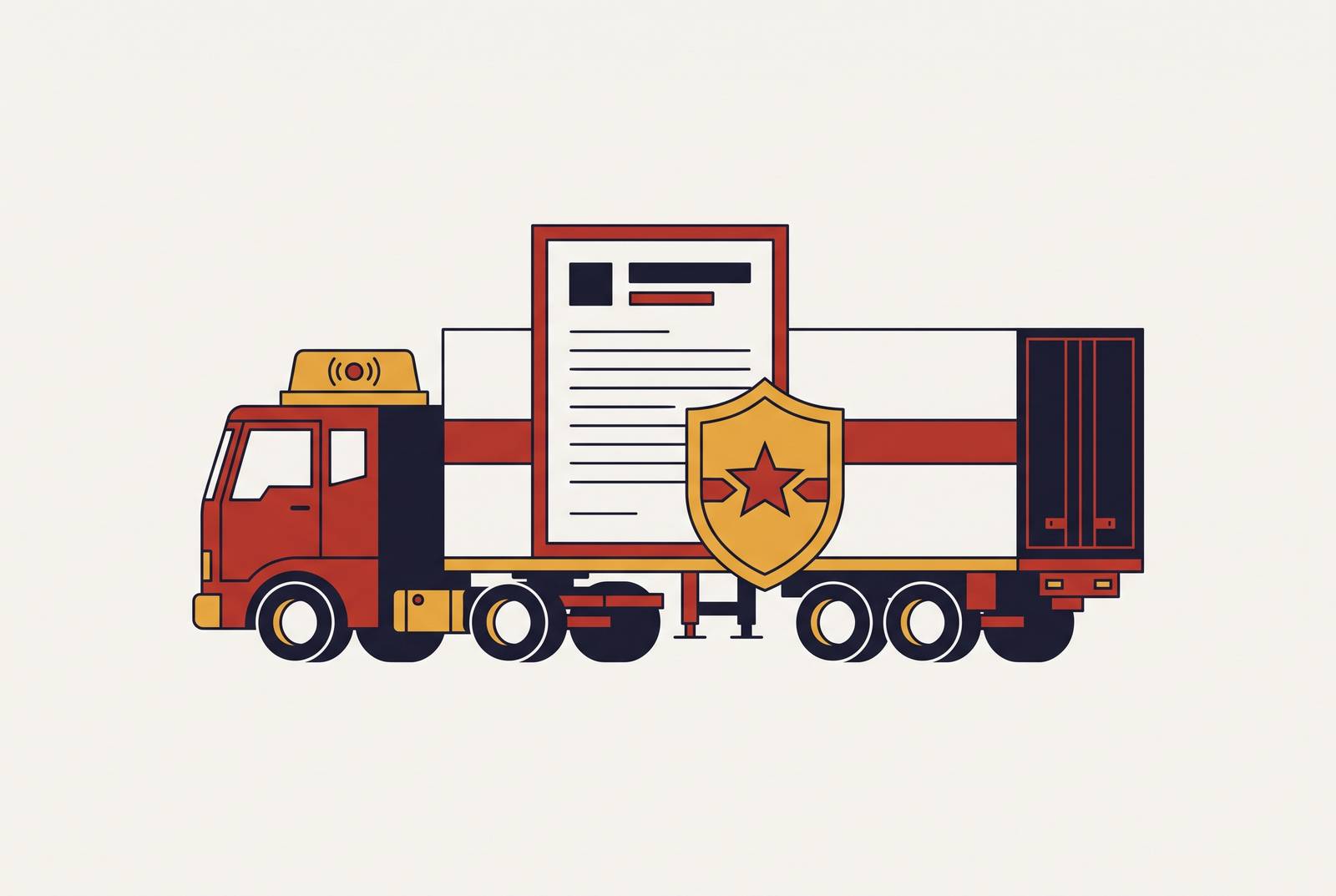
MCS-90 applicability to autonomous carriers turns on a distinction between protecting the public and insuring the operation. The endorsement can require an insurer to pay an excluded judgment and then seek repayment from the carrier. A good underwriting submission for autonomous hardware must therefore explain the ADS architecture, contractual responsibility, data governance, and incident response clearly enough for the insurer to cover how the business runs, beyond a generic trucking risk.
What the MCS-90 endorsement actually is and how it works
The MCS-90 is a surety-like federal guarantee attached to a motor carrier’s existing auto liability policy. FMCSA identifies its authority as 49 CFR § 387.15 and Sections 29 and 30 of the Motor Carrier Act of 1980. Its purpose is to preserve a source of payment for injured third parties when the underlying policy would not respond. The distinction matters because an obligation to pay the public is not the same as an obligation to absorb the carrier’s loss.
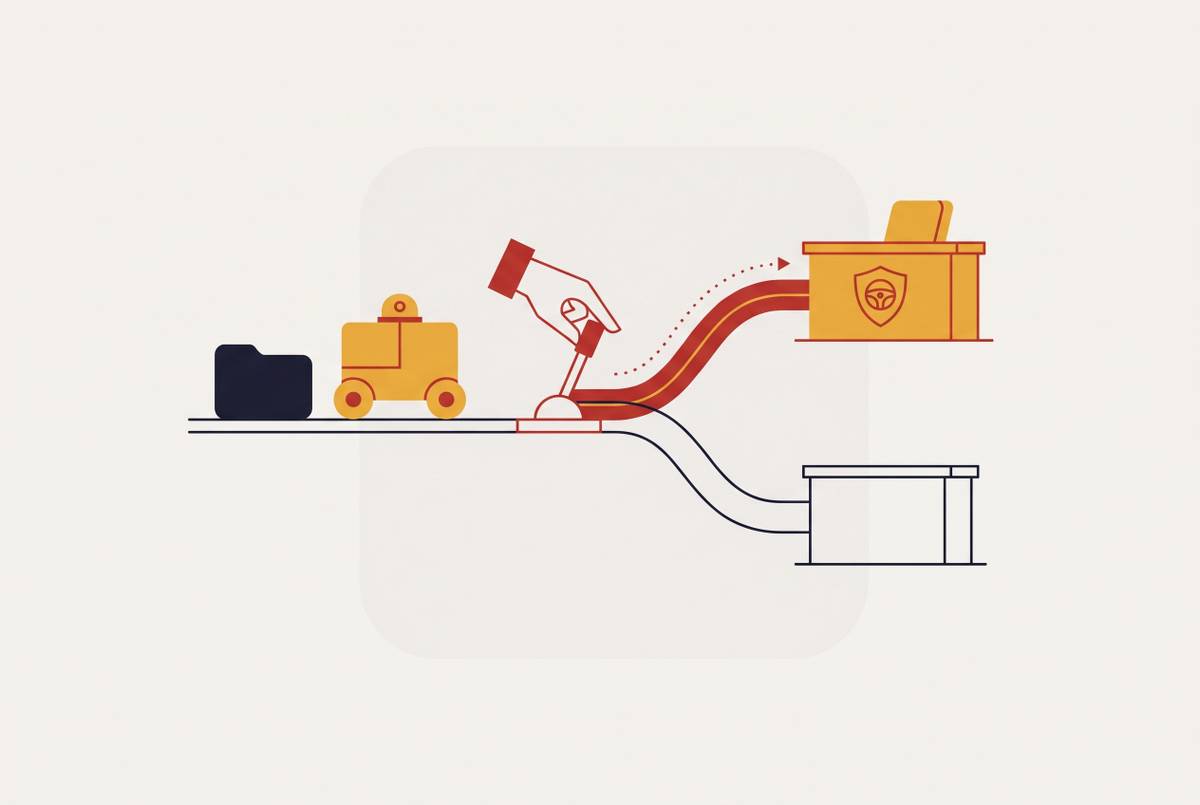
The endorsement obligates the insurer to pay a final judgment up to the applicable federal minimum even when the policy itself would deny the claim. The insurer then has the right to seek reimbursement from the motor carrier for that forced payment. An excluded claim therefore does not disappear when the injured party receives payment. The relevant gaps can include an excluded vehicle, an unauthorized cargo type, a route outside the declared territory, or a lapsed policy.
The minimum limits provide context for that exposure. General non-hazmat freight carries a $750,000 minimum, while oil and certain hazardous waste require $1,000,000. The $5,000,000 tier applies to bulk explosives, certain poisonous gases, certain highly toxic materials, highway-route-controlled radioactive materials, and hazardous substances in portable tanks, cargo tanks, or large hopper-type vehicles. Many shippers and brokers will not book loads with less than $1,000,000 in coverage, so that amount is a market standard even though the general-freight floor is lower. Neither the statutory minimum nor the market standard resolves what the underlying policy actually covers.
FMCSA states that the endorsement attaches to the carrier’s policy and applies to vehicles operated under that policy that are subject to federal financial responsibility requirements. The public-protection logic is “pay first, argue later”.
Why the MCS-90's logic assumes a human operator at every step
The framework’s original problem was a carrier whose vehicle use could escape the boundaries of its insurance. Interchanged, leased, or substitute vehicles could fall outside coverage even though they were carrying out the carrier’s business. The endorsement addressed that gap within a system of human decisions and carrier control. Unauthorized use, negligent operation, and driver fault all fit that structure. The carrier could be held responsible for an operator whose conduct it was expected to control.
An unauthorized vehicle implies that someone chose to use it. An unlicensed driver presupposes a person at the controls, while an off-policy route implies a navigation decision attributable to that person. An Automated Driving System (ADS), by contrast, executes a software-defined route. The policy language still describes departures from authorized operation, but the source of the departure has changed. The vocabulary was built around conduct and is now being applied to system behavior.
That change also affects how fault is described. Commercial trucking negligence has historically centered on speed, fatigue, inattention, and intoxication. Level 4 ADS failures are more likely to involve design defects, sensor errors, or edge-case algorithmic failures, which raise product-liability questions rather than conventional operator-negligence questions. The endorsement says no “policy violation shall relieve the company from payment”. It does not explain what constitutes that violation when there is no driver to violate a term.
The reimbursement chain remains directed at the motor carrier even when a separate company supplies the software stack. As a result, the entity responsible for repaying the insurer and the entity responsible for the technical failure may differ. For specialist brokers, including Risklytics, the underwriting distinction is whether the ADS vendor, the fleet operator, or both are the liability target. That distinction belongs in the initial presentation of the risk as well as in the later allocation of a claim. It exposes a structural mismatch without establishing how any court would resolve it.
The regulatory gap FMCSA has not yet closed
FMCSA’s Federal Register output contained no final rule and no proposed rule governing inspection or maintenance standards for ADS-equipped commercial vehicles as of August 12, 2026. A rulemaking originally projected for May 2026 and then expected by August 2026 had not materialized. Autonomous carriers therefore had to meet inspection and maintenance requirements written for human-piloted trucks. The gap was not simply uncertainty about how an old insurance form might be interpreted. The operating standards needed to support that interpretation were themselves unresolved.
The proposed America Drives Act would expressly allow semi-trucks to run without a human driver or remote human operator at Level 4 or Level 5 ADS. It sets September 30, 2027, as the target for the Secretary of Transportation to address which existing FMCSA regulations apply only to human-piloted trucks. The Act has not passed. Its target date is therefore not a completed regulatory change on which an underwriter can rely. Carriers seeking insurance for software-driven operations must still file MCS-90 endorsements with trigger language that assumes a human is acting.
Hazardous materials create a separate, harder boundary. FMCSA cannot administratively grant a driverless carrier permission to haul hazardous materials under Part 397. Only formal rulemaking or an act of Congress can change that restriction. The endorsement’s highest hazmat tier is consequently inaccessible to fully autonomous operators regardless of their capital or insurance limits. Buying more insurance cannot supply operating permission that the framework does not provide.
Administrative changes do not close these substantive gaps. FMCSA eliminated new MC number issuance on October 1, 2025, leaving new carriers with only a USDOT number. That change addresses carrier identification, while ADS inspection, maintenance, and responsibility remain unresolved. The two tracks do not resolve each other.
What autonomous commercial operations actually look like under the current framework — Aurora Innovation
Aurora Innovation started the first driverless commercial trucking service on public U.S. roads in 2025, hauling regular self-driving freight between Dallas and Houston, Texas. It was targeting expansion to hundreds of driverless trucks across the Sun Belt by the end of 2026. Its launch demonstrates that commercial operations can proceed within the existing framework. It does not demonstrate that the framework has settled the division of responsibility between the carrier and the driving technology provider.
FMCSA denied an earlier broad request from Aurora and Waymo in December 2024, and Aurora sued. FMCSA subsequently granted a narrower waiver effective October 10, 2025, allowing cab-mounted warning beacons in place of reflective triangles. On October 7, 2026, FMCSA granted Aurora Operations and other Level 4 carriers a five-year exemption through October 7, 2031, on the same terms. This addressed a specific operational requirement rather than rewriting the underlying insurance architecture.
Aurora’s Driver-as-a-Service model makes the responsibility split concrete. Fleet operators such as Hirschbach subscribe to the Aurora Driver on a per-mile basis. The motor carrier holding FMCSA operating authority, and therefore carrying the MCS-90, is a different legal entity from the ADS developer. Reimbursement runs toward the carrier, while the technical source of a failure may be Aurora’s software. Operating authority and a filed endorsement can coexist with that unresolved allocation.
Apollo, a Lloyd’s of London syndicate, insures Aurora’s fleet. Apollo ibott Chief Underwriting Officer Chris Moore has said that insurance for Aurora’s autonomous trucks costs slightly more than for human drivers because it is still unclear how severe claims will be. Apollo has crash-frequency data, but few AV claims have reached litigation, leaving the nuclear-verdict tail unquantified. Moore expects rates to fall materially year-over-year as claims data accumulates.
Where standard commercial policies break down for autonomous carriers
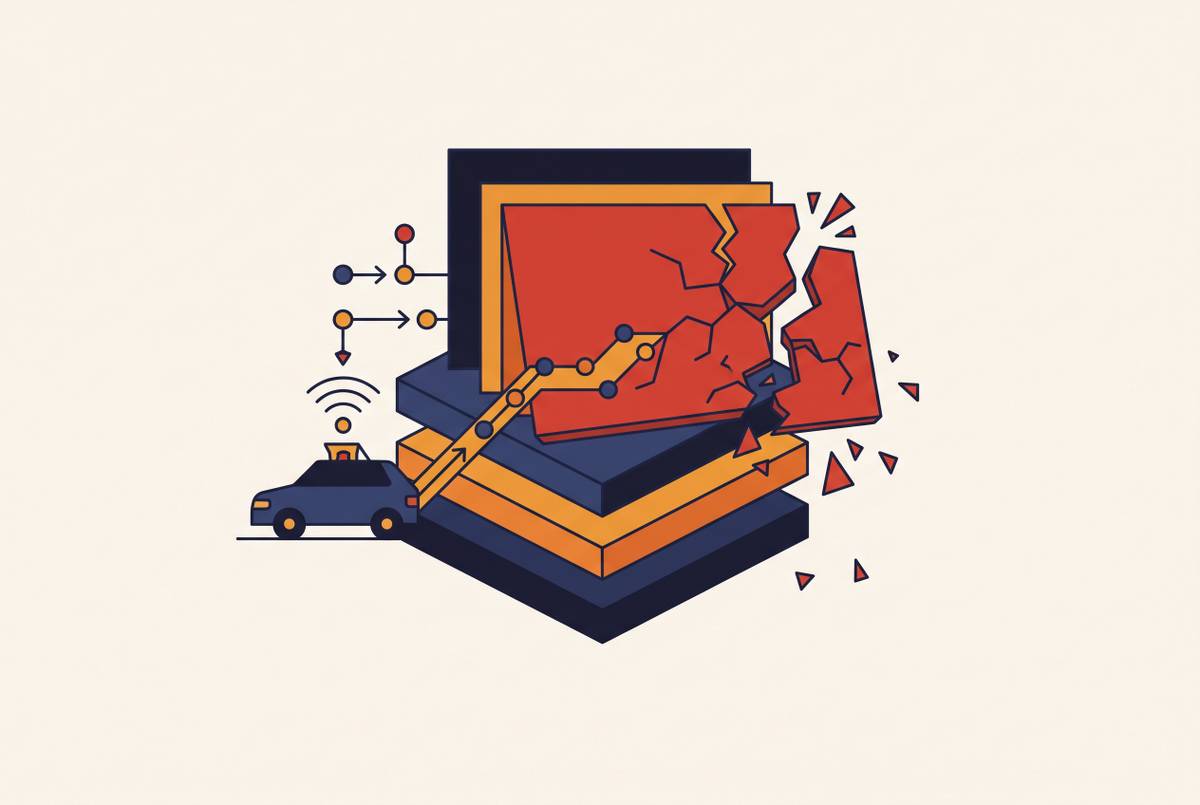
A single autonomous vehicle incident can involve auto liability, product liability, and cyber coverage at the same time. Satellite system interruptions, network or ADS malfunctions, and multi-party product liability do not fit neatly within a standard commercial auto form. Separate policies need terms that address the same event without leaving responsibility disputed between them.
Insurance Information Institute Vice President Loretta Worters has noted that “many policies were not originally designed with cyber-physical events in mind, which can lead to ambiguity around how coverage applies”. She has also warned that “there can also be a disconnect between policies that cover cyber events and those that cover bodily injury, creating potential gray areas in claims”. A cyber event can directly cause a physical autonomous vehicle liability claim. Placing cyber and auto liability through a single carrier or a coordinated program reduces the risk of a dispute at that boundary.
The program must also separate the carrier’s road liability from the developer’s technology exposure. Auto liability and the MCS-90 address the operating-authority requirement and the public backstop, with reimbursement risk resting on the motor carrier. Tech E&O and product liability cover ADS developers that supply software or technology stacks to OEMs and fleet operators. Contract and OEM risk then determine how much responsibility those agreements push back onto the developer. Indemnification clauses can leave the developer with a large risk that a generic business description or an auto-only submission would miss.
Sensor arrays, lidar units, and compute hardware mounted on an autonomous truck need inland marine or equipment floater coverage because standard auto or general liability does not cover the risk to that equipment. D&O covers the regulatory, balance-sheet, and shareholder litigation risks that AV companies face, whether they are privately held or nearing a liquidity event. These lines form an interconnected program.
Incomplete claims history further limits how precisely that program can be priced. With no regulatory mandates or industry-wide data-sharing standards in place, OEMs and ADS developers still control the vehicle logs and system data. Underwriters therefore cannot readily close the severity gap Apollo has identified. To help place coverage, Risklytics works with insurers that expressly cover autonomy and has a licensed broker read every policy before binding.
How does submission quality keep the MCS-90 backstop from becoming a financial trap?
The reimbursement trap is that the MCS-90 can expose underinsurance while leaving it unresolved. When an insurer must pay an excluded judgment, the carrier can still face the financial burden through repayment. An undeclared operation type, an unreflected cargo category, or a use outside the underwritten territory can create precisely that problem. The endorsement protects the injured party while leaving the carrier’s coverage failure intact. Its presence is not evidence that the insurance program was built correctly.
A generic trucking submission lists the vehicle classes, driver schedules, and routes. A strong submission for autonomous hardware with AI-driven decision making describes the ADS architecture, operator-developer contractual split, data governance structure, and incident response protocol. It also makes the sensor hardware exposure and cyber-physical overlap visible. Without them, an underwriter can classify the business without understanding the operation.
Specialist markets include Apollo, a Lloyd’s syndicate that insures autonomous risk. Access to those markets depends on presenting the operation in terms their underwriters can assess. The market has accumulated hundreds of millions of driverless miles without a settled actuarial framework, leaving a patchwork of traditional auto, product liability, and manufacturer self-insurance. The submission is therefore the instrument that shapes how an unfamiliar risk is categorized and priced. It cannot settle negligence law, but it can make dependencies and contractual liabilities explicit before coverage is offered.
The policy review must then check whether the offered terms fit the business as described in the submission. Among the specialist options, Risklytics builds submissions from actual autonomous systems, robotics, and hardware operations rather than generic forms, then places them with carriers that explicitly cover autonomy. Its licensed-broker review before binding addresses the exclusions that could later become reimbursement obligations. The commission is already embedded in the premium whether or not a specialist places the policy. The controllable variable is the quality of the submission and the review that turns it into coverage for the operation actually being run.